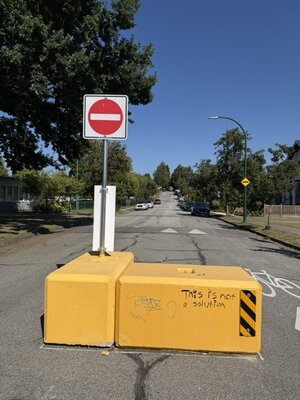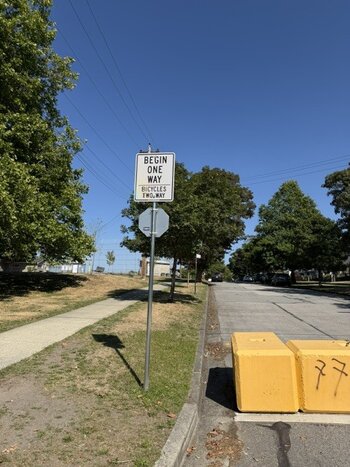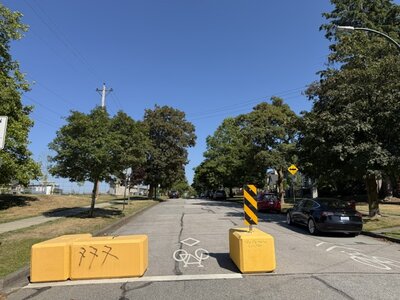
The value of a local business extends only to its door - with accessibility shaping the customer experience. The ability to seamlessly, and safely, maneuver from curb to threshold will determine outreach; and, for those with disabilities, a series of traffic calming barriers and complicated routes will undermine their everyday errands.
In 2022 Statistics Canada reported that 4.5 million Canadians with disabilities—56% of those aged 15 and older—experienced barriers in public spaces. 26% of individuals encountered issues involving sidewalks (including blocked ramp access and uneven extenders), while 20% reported concerns at building entrances or exits. Among Canadians aged 65 and older, 69% noted at least one public-space accessibility barrier in their daily commutes.
Transportation access presents another concern: Statistics Canada's 2025 accessibility report showed that 47.3% of persons with disabilities had unmet transportation needs, while 80.5% of persons who used transportation services experienced barriers related to the built environment. Trying to access local businesses becomes a challenge, with poorly implemented traffic calming measures limiting parking, reducing curb space, and forcing complicated reroutes. Reaching the front door is no longer a simple matter; it's instead a time-consuming, and potentially unsafe, series of steps.
With the rise in traffic calming comes a concern of accessibility - and a very important question. How are those with disabilities meant to engage with their local communities when they can no longer navigate them?
Sources
Statistics Canada — Barriers to Accessibility in Canada: Public Spaces, 2022
Statistics Canada — Barriers to Accessibility in Public Spaces: Findings from the 2022 Canadian Survey on Disability
Government of Canada, Article 9: Accessibility — Indicators for the UN Convention on the Rights of Persons with Disabilities
Traffic Calming Effects In East Vancouver
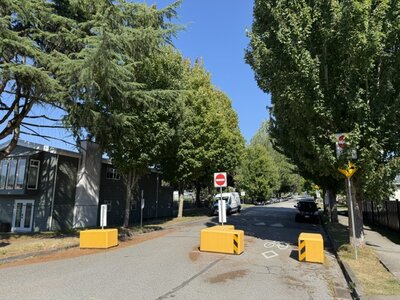
The Business of Accessibility: Traffic Calming In East Vancouver